
Hearing that your child might need sedation at the dentist can bring up a lot of questions. What’s actually involved? Is it safe? What’s the difference between the options? We’re excited to now offer nitrous oxide and general anesthesia at several Joie Smiles offices. Here’s a clear breakdown of both and how to know which one might fit your child’s visit.
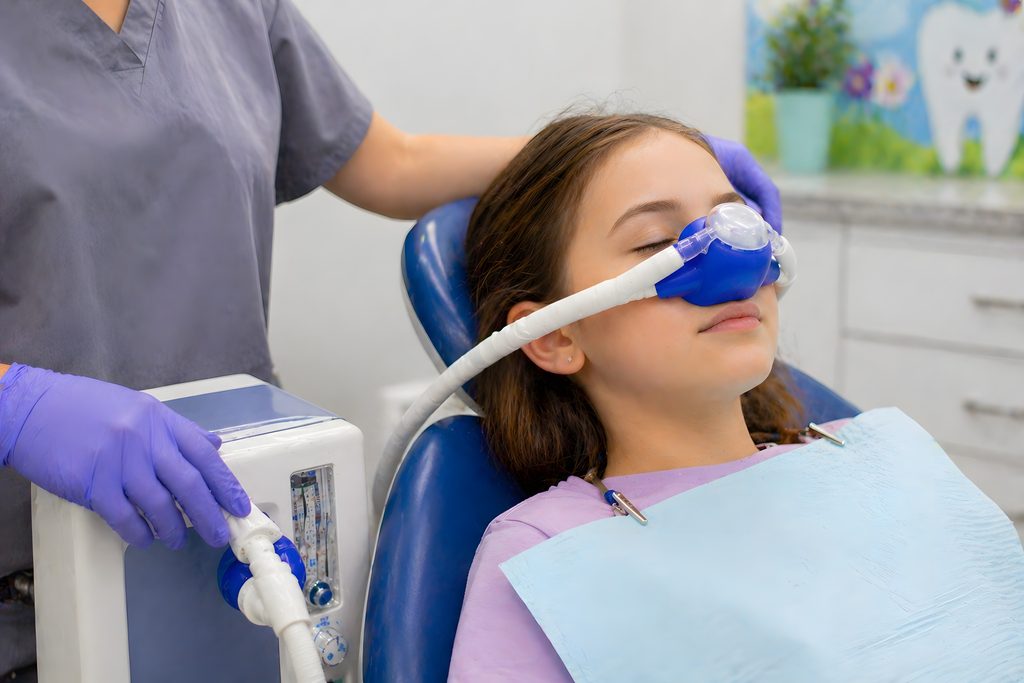
What Is Nitrous Oxide?
Nitrous oxide, sometimes called “laughing gas,” is a mild sedative. Your child breathes it in through a small nasal mask, mixed with oxygen. It helps kids feel relaxed and less anxious during treatment, but it doesn’t put them to sleep. Your child stays awake, can respond to questions, and breathes entirely on their own the whole time.
The effects kick in within a few minutes. Once the mask comes off at the end of the appointment, your child breathes in a few minutes of pure oxygen. The sedative effect clears from their system quickly. Most kids feel back to normal shortly after leaving the chair.
Nitrous oxide for kids is typically used for:
- A child who feels nervous, fearful, or fidgety during treatment
- A sensitive gag reflex that makes certain procedures harder
- A longer procedure that requires a child to sit still for an extended time
- Kids who are otherwise cooperative but need a little extra help staying calm
How Nitrous Oxide Works in the Body
Nitrous oxide doesn’t just distract or calm a child psychologically. It acts directly on the brain and nervous system. Once inhaled, it affects two main receptor systems. First, it triggers the release of the body’s own natural pain-relief chemicals. This raises the pain threshold. Second, it boosts the activity of GABA, the brain’s main calming neurotransmitter. That’s part of why it produces that relaxed, sometimes giggly feeling. Research published in the NCBI Bookshelf also links nitrous oxide’s sedative effects to blocking NMDA receptors, a type of receptor tied to pain signaling and alertness.
This dual action, calming the nervous system while also reducing pain sensitivity, is why nitrous oxide works well for anxious kids without putting them fully to sleep. It’s also fast-acting in both directions. The body doesn’t absorb and break it down the way it does with many medications. Instead, your child inhales and exhales it largely unchanged. That’s exactly why the effects appear within minutes and clear just as quickly once the mask comes off.
What is General Anesthesia?
General anesthesia is a deeper level of sedation. Unlike nitrous oxide, it puts your child fully asleep for the procedure. Dentists use it for more extensive or complex dental work. An anesthesiologist administers and closely monitors it throughout the visit, tracking your child’s breathing, heart rate, and other vital signs the entire time.
General anesthesia is typically considered for:
- Very young children who can’t yet cooperate with treatment
- Kids that require extensive dental work in a single visit
- Children with special healthcare needs where a traditional visit isn’t realistic
- Cases where anxiety is severe enough that nitrous oxide alone isn’t enough
How General Anesthesia Works in the Body
General anesthesia produces a temporary, drug-induced state of unconsciousness. Current understanding points to anesthetic drugs acting on several receptor systems at once, including GABA receptors, NMDA receptors, and others involved in maintaining wakefulness. Slowing activity across these pathways produces the four hallmarks of general anesthesia: unconsciousness, amnesia, pain control, and stillness during the procedure.
Because it affects the whole body’s systems, not just local pain signals, general anesthesia requires closer monitoring than nitrous oxide. An anesthesiologist tracks breathing, heart rate, oxygen levels, and other vital signs throughout the entire procedure, adjusting as needed to keep your child safe and stable.
How The Two Procedures Differ
The biggest difference between nitrous oxide and general anesthesia comes down to consciousness and depth. Nitrous oxide keeps your child awake, aware, and breathing independently. Its effects wear off within minutes. General anesthesia puts your child fully asleep. It requires closer medical monitoring, and the effects take longer to fully wear off afterward.
Neither option is “better” across the board. The right choice depends on your child’s age, anxiety level, medical history, and the specific treatment they need. Your dentist will walk you through which approach makes the most sense before any appointment that involves sedation.
Frequently Asked Questions
Yes. According to AAPD guidelines on nitrous oxide, nitrous oxide has a long track record of safe use. It’s one of the most common sedation methods in pediatric dentistry. It carries a strong safety profile when providers properly screen patients beforehand. That’s why your dentist will always review your child’s full medical history first.
Mild side effects are possible but uncommon. The most frequently reported one is nausea, which usually passes quickly. Some children may also feel briefly lightheaded or tingly as the gas takes effect. Your dentist will ask about your child’s health history in advance, since certain conditions, like a stuffy nose or specific respiratory issues, can make nitrous oxide less effective or not the right fit.
Yes. Because it’s a deeper level of sedation, general anesthesia involves more monitoring, and that monitoring is exactly what makes it safe. A dedicated anesthesiologist stays focused on your child throughout the procedure, tracking vital signs and responding immediately to any changes.
No. General anesthesia includes pain control as one of its core effects, along with unconsciousness, amnesia, and stillness. Your child won’t feel or remember the procedure.
That’s common, and it’s exactly what the pre-appointment medical history review is for. Your dentist will walk through your child’s health background, any allergies, and what to expect, so there are no surprises going in. If you have specific concerns, mention them beforehand and your dentist can address them directly.
What to Expect at the Appointment
Before the appointment
Your dentist will review your child’s medical history and ask about allergies or prior reactions to sedation. If general anesthesia is planned, we’ll also need sign-off from your child’s general doctor beforehand, confirming they’re healthy enough for the procedure. According to AAPD and American Academy of Pediatrics guidelines, this pre-appointment evaluation exists to catch any underlying medical conditions that could increase risk before sedation happens, not just to check a box.
You’ll also get clear fasting instructions if general anesthesia is planned. These rules exist to reduce the risk of complications during sedation and are based on preoperative fasting guidelines set by the American Society of Anesthesiologists.
During the appointment
Our team monitors your child closely throughout the procedure and keeps you updated. For general anesthesia, that includes continuous tracking of oxygen levels, heart rate, and other vital signs in a properly equipped recovery area, following the same guidelines pediatric hospitals use.
After the appointment
Nitrous oxide wears off within minutes, so most kids can resume normal activities the same day. General anesthesia takes longer. Your child stays in recovery until they’re back to their normal level of alertness, not just technically awake, before we send them home. It’s common for kids to feel sleepy, mildly uncomfortable, or reluctant to eat for the rest of that day; these effects are usually short-lived. Plan for a quiet rest of the day, skip anything physically demanding, and call our office if anything seems off rather than waiting to see if it resolves on its own.
Have questions about sedation options for your child? Our team at Joie Smiles is happy to talk through what’s right for your child’s next visit.